Not all social media influencers serve the same purpose, and treating them as one interchangeable category is one of the fastest ways to waste a campaign budget. The influencer landscape has diversified well beyond a simple follower-count hierarchy — content style, platform, and even the type of deal structure now shape what a specific creator is actually good for. Social Media Influencers Every Brand Should A brand that understands this distinction can spend far more efficiently than one applying the same generic strategy to every single creator relationship. Here are the eight types of social media influencers worth understanding before building a campaign strategy around any of them.
- Nano influencers — small but disproportionately engaged
- Micro influencers — the current sweet spot for most brands
- Macro and mega influencers — scale and cultural credibility
- Celebrity crossover influencers — fame built outside social media
- Niche expert and thought-leader influencers — trust through subject-matter authority
- UGC creators — content for ads, not necessarily organic reach
- De-influencers — an emerging anti-hype voice
- Virtual and AI influencers — brand-owned, fully controllable personas
Contents
- 1 Why the Old Follower-Count Hierarchy No Longer Tells the Whole Story
- 2 1. Nano Influencers — Small but Disproportionately Engaged
- 3 2. Micro Influencers — The Current Sweet Spot for Most Brands
- 4 3. Macro and Mega Influencers — Scale and Cultural Credibility
- 5 4. Celebrity Crossover Influencers — Fame Built Outside Social Media
- 6 5. Niche Expert and Thought-Leader Influencers — Trust Through Subject-Matter Authority
- 7 6. UGC Creators — Content for Ads, Not Necessarily Organic Reach
- 8 7. De-influencers — An Emerging Anti-Hype Voice
- 9 8. Virtual and AI Influencers — Brand-Owned, Fully Controllable Personas
- 10 How to Choose the Right Type for Your Campaign
- 11 Common Mistakes Brands Make When Choosing an Influencer Type
- 12 Final Thoughts
- 13 Frequently Asked Questions
Why the Old Follower-Count Hierarchy No Longer Tells the Whole Story
For years, brands mostly evaluated social media influencers by a simple scale — more followers meant more value. That model has broken down as the industry has matured. Social Media Influencers Every Brand Should Per Stack Influence’s 2026 breakdown, the influencer landscape has exploded into a multi-billion dollar industry, with global influencer marketing expected to reach roughly $32.5 billion in 2026, and it’s become far more diverse than a simple size-based hierarchy can capture.
That diversity now spans not just follower count, but content style, deal structure, and even whether a “creator” is human at all. Social Media Influencers Every Brand Should Per Lessie’s 2026 influencer typing guide, the smarter approach for brands is combining tier with niche fit, audience quality, content style, and deal role to choose the right type of social media influencers for a specific objective, rather than relying on follower count as the only meaningful score.
1. Nano Influencers — Small but Disproportionately Engaged
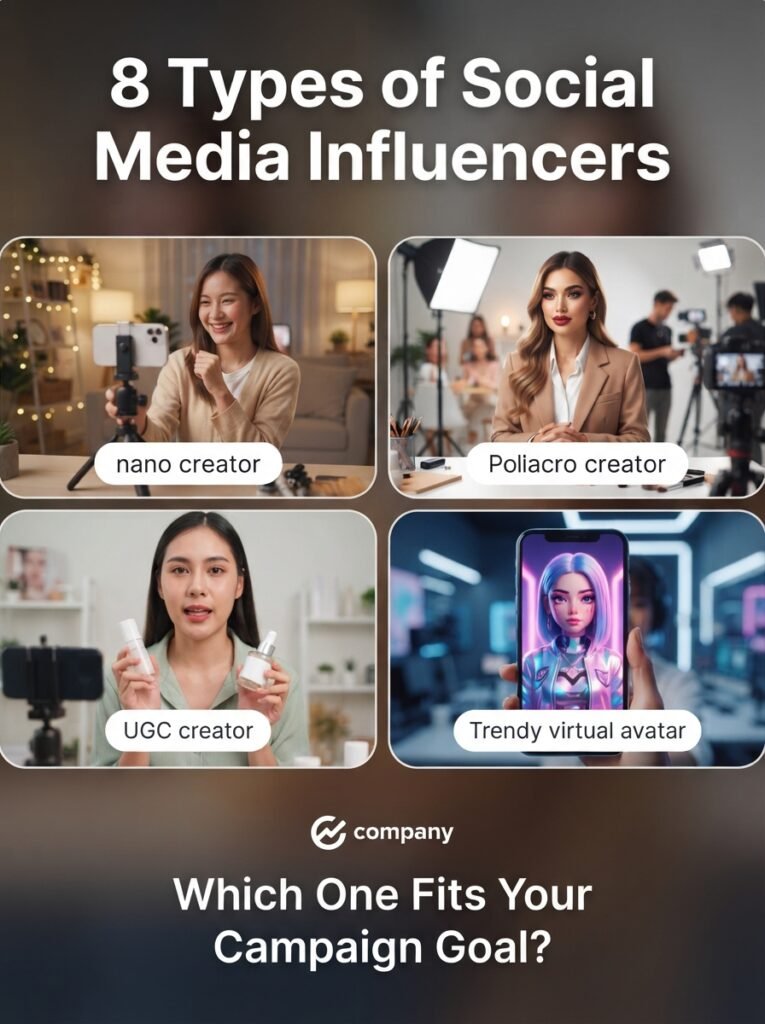
Nano influencers, typically holding somewhere between 1,000 and 10,000 followers, sit at the smallest tier but consistently punch above their weight on engagement. Social Media Influencers Every Brand Should Per Taggbox’s 2026 influencer guide, nano-influencers achieve engagement rates around 5%, actually beating out mega influencers with over a million followers, despite being one of the most overlooked categories in the industry.
This tier of social media influencers works particularly well for brands testing a new category or product before committing significant budget. Social Media Influencers Every Brand Should Their audiences tend to know them personally or feel a close, authentic connection, which produces the kind of trust-driven engagement that’s difficult to replicate at larger scale, even though the total reach of any single nano partnership remains modest.
Working with this tier at scale requires a different operational approach than a single larger partnership would. Social Media Influencers Every Brand Should Rather than negotiating one deal, brands often coordinate dozens of nano creators simultaneously, which means streamlined outreach and simple, standardized compensation structures — often product exchanges alongside a modest fee — become essential for managing the tier efficiently without administrative overhead outweighing the value gained.
2. Micro Influencers — The Current Sweet Spot for Most Brands
Micro influencers, generally in the 10,000 to 100,000 follower range, have become the default recommendation for brands wanting a balance of reach and genuine audience trust. Social Media Influencers Every Brand Should This tier occupies a particularly useful middle ground — large enough to deliver meaningful reach, small enough that the audience still feels like a real community rather than a passive, scattered following.
Brands working with well-matched micro-tier social media influencers typically see stronger cost-per-engagement efficiency than larger partnerships, since this tier tends to combine reasonably broad reach with the kind of niche credibility that drives genuine purchase consideration rather than passive awareness alone. Social Media Influencers Every Brand Should This makes the tier a strong default starting point for most brands building their first structured influencer program.
Rate variation within this tier can be significant depending on niche and engagement quality, which is why brands shouldn’t assume every micro creator costs roughly the same. Social Media Influencers Every Brand Should A high-engagement creator in a competitive category can command notably higher rates than a similarly-sized account in a less crowded niche, since demand within a specific category ultimately drives pricing more than raw follower numbers alone.
3. Macro and Mega Influencers — Scale and Cultural Credibility
At the larger end of the spectrum, macro influencers generally hold 100,000 to 1 million followers, while mega influencers exceed a million. Social Media Influencers Every Brand Should Per Stack Influence’s data, macro influencers by 2026 have often polished their craft over years, producing high-quality content and acting as trendsetters or authorities within their broader niche, sometimes launching their own product lines or brand collaborations leveraging their platform.
Brands typically bring in this tier of social media influencers for mass awareness goals, product launches, or category-level credibility rather than tight, niche-targeted engagement. Social Media Influencers Every Brand Should Per Tomoson’s 2026 guide, macro and mega influencers generally deliver lower engagement rates and higher cost per conversion than micro-tier creators, which means this tier is best reserved for campaigns where broad visibility genuinely matters more than tightly targeted conversion.
Content quality expectations also shift meaningfully at this tier. Social Media Influencers Every Brand Should Macro and mega creators generally operate with more polished production values and a more curated personal brand aesthetic than smaller creators, which suits campaigns wanting a specific visual standard but can sometimes trade off some of the raw authenticity that makes smaller-tier content feel more relatable to its audience.
4. Celebrity Crossover Influencers — Fame Built Outside Social Media
A distinct category from organically-grown creators, this type of social media influencer built their fame elsewhere — film, sports, music, television — before establishing a large online following. Social Media Influencers Every Brand Should Per Metricool’s 2026 influencer report, these figures bring significant star power and wide exposure, though their influence can feel less personal than a creator whose entire following was built natively on social platforms.
Some celebrities in this category have started partnering with content strategists specifically to close that authenticity gap, incorporating behind-the-scenes content, Q&As, or day-in-the-life posts to build a more genuine connection with their audience rather than relying purely on their outside fame. Social Media Influencers Every Brand Should Brands working with this type of social media influencers should factor in that raw reach often comes at the cost of the tighter engagement and niche trust that native platform creators typically deliver.
Pricing at this tier also tends to reflect celebrity status rather than platform-native engagement metrics, meaning brands often pay a significant premium for association with a recognizable name regardless of how that translates into actual conversion. Social Media Influencers Every Brand Should This tier makes the most sense for brands whose goal is genuine cultural visibility and brand association, rather than performance-driven conversion metrics.
5. Niche Expert and Thought-Leader Influencers — Trust Through Subject-Matter Authority
This category has grown significantly as B2B and specialized consumer categories have matured on social platforms. Social Media Influencers Every Brand Should Per Metricool’s report, marketing-focused thought leaders are booming across platforms like LinkedIn, YouTube, and Twitter/X, sharing strategy tips, industry trends, and actionable advice built on genuine professional expertise rather than lifestyle content.
For brands in finance, technology, healthcare, or other specialized B2B categories, this type of social media influencers delivers a fundamentally different value than lifestyle-focused creators. Social Media Influencers Every Brand Should Audiences follow these accounts specifically for credible, expert-level insight, which means sponsored content needs to maintain that same standard of substance rather than reading as an obvious, lightweight advertisement dropped into an otherwise expert-focused feed.
This category also tends to reward longer-term relationships over one-off sponsored posts. Social Media Influencers Every Brand Should A finance or technology expert who genuinely uses and discusses a product over several months builds far more credibility with their audience than one delivering a single scripted endorsement, since their audience has come to trust their ongoing, unpaid commentary between sponsored content.
6. UGC Creators — Content for Ads, Not Necessarily Organic Reach
A newer, increasingly important category doesn’t fit the traditional organic-reach model at all. Social Media Influencers Every Brand Should Per Lessie’s 2026 guide, user-generated-content creators are often evaluated on portfolio quality and conversion literacy rather than follower count, since brands are typically buying ad-ready creative assets and usage rights rather than access to an existing audience.
This type of social media influencer partnership is frequently paired with whitelisting or paid social amplification, meaning the content is designed from the outset to run as a paid ad rather than an organic post on the creator’s own page. Social Media Influencers Every Brand Should Brands optimizing heavily for paid social efficiency increasingly treat UGC creators as a distinct, specialized category, separate from the reach-and-engagement-focused influencer relationships covered in the tiers above.
This category has grown quickly precisely because it decouples content quality from audience size, which opens up a much larger talent pool for brands. Social Media Influencers Every Brand Should A skilled UGC creator with a modest personal following can still produce highly effective ad creative, since the brand is buying the content itself and the rights to use it in paid campaigns, not access to that creator’s own organic audience.
7. De-influencers — An Emerging Anti-Hype Voice
A genuinely new category has emerged as audiences grow fatigued with constant, unquestioning product promotion. Social Media Influencers Every Brand Should De-influencers build their following partly by pushing back against overconsumption and hype-driven marketing, recommending against certain purchases or calling out overhyped products rather than promoting everything uncritically.
This type of social media influencers presents a different kind of opportunity and risk for brands. Social Media Influencers Every Brand Should Social Media Influencers Every Brand Should A genuine, unsponsored recommendation from a de-influencer known for skepticism can carry disproportionate credibility precisely because that creator doesn’t promote everything indiscriminately, but brands need to approach this category with a lighter touch — a heavy-handed sponsored post from a creator known for authenticity and restraint can backfire if it feels inconsistent with their established voice.
The most effective way brands work with this category isn’t through a traditional paid endorsement at all. Social Media Influencers Every Brand Should Some brands instead focus on genuinely earning organic mentions by making product decisions — sustainable materials, honest pricing, long-term durability — that align with the values this audience already cares about, rather than attempting to purchase a recommendation that would feel inauthentic coming from a creator whose entire reputation is built on selectivity.
8. Virtual and AI Influencers — Brand-Owned, Fully Controllable Personas
The most structurally different category on this list isn’t human at all. Social Media Influencers Every Brand Should Virtual influencers — computer-generated personas with their own social media presence — offer brands complete creative control: no scheduling conflicts, no off-brand controversies, and infinitely reusable digital assets across campaigns.
This type of social media influencer partnership is still a relatively small share of the overall market, but it’s growing quickly as the underlying technology improves and production costs fall. Social Media Influencers Every Brand Should Brands experimenting with this category should understand that audiences generally know when they’re engaging with a virtual persona, which means the trust dynamics differ meaningfully from a genuine human creator, particularly for categories like beauty or wellness where lived, personal experience with a product tends to carry real weight in a genuine recommendation.
Virtual influencers tend to perform best for brand-owned storytelling and consistent messaging rather than the trust-driven, review-style content that still favors human creators. Social Media Influencers Every Brand Should A brand launching a new product line or building a long-term brand mascot might find real value in a virtual persona’s infinite reusability and creative control, while a brand needing genuine, lived-experience endorsement is generally better served by one of the human creator categories covered above.
How to Choose the Right Type for Your Campaign
With this many distinct categories of social media influencers available, matching the right type to a specific campaign comes down to a few practical questions.
What’s the actual campaign objective? Mass awareness and product launches tend to benefit from macro, mega, or celebrity-tier reach, while trust-driven conversion goals are typically better served by nano and micro creators, or niche experts within a specialized category. Being explicit about this goal before reaching out to any creator type prevents the common mistake of choosing reach for a campaign that actually needed trust and conversion.
Do you need organic reach or ad-ready creative assets? If the goal is running paid social ads rather than building on a creator’s existing audience, UGC creators focused purely on content quality and usage rights may be a better fit than a traditional influencer partnership built around reach.
Does your category call for subject-matter credibility? B2B, finance, and other specialized categories generally benefit more from niche expert and thought-leader influencers than from broad lifestyle creators, regardless of follower count.
Is your brand ready for the trust trade-offs of virtual influencers or de-influencer partnerships? These emerging categories offer genuine opportunity but require a more deliberate approach than a standard sponsored post, given the different trust dynamics each carries. Social Media Influencers Every Brand Should Brands new to either category are often better served starting with a smaller test campaign before committing significant budget to an unfamiliar creator relationship style.
Navigating this many distinct types takes real strategic thinking, especially for brands unfamiliar with which category best fits a specific campaign goal. Social Media Influencers Every Brand Should The Digital Agency helps brands identify the right type of social media influencers for their specific objectives, handling sourcing, vetting, and campaign management across the full spectrum of creator categories covered in this guide. You can explore their influencer marketing services or get in touch here to discuss the right approach for your brand.
Common Mistakes Brands Make When Choosing an Influencer Type
Even brands familiar with the general landscape of social media influencers run into a few recurring traps.
Defaulting to reach regardless of campaign goal. Choosing macro or mega-tier social media influencers for a campaign that actually needed trust-driven conversion often wastes budget on visibility that doesn’t translate into the outcome the brand actually needed. This mismatch is one of the most common and most avoidable budget-planning errors brands make.
Treating UGC creators like traditional influencers. Evaluating a UGC creator by follower count, when the actual value is content quality and usage rights for paid ads, leads to mismatched expectations and wasted negotiation effort on the wrong criteria entirely.
Ignoring niche expert creators in specialized categories. Brands in B2B, finance, or technical categories sometimes default to general lifestyle influencers, missing the stronger credibility and conversion that subject-matter expert social media influencers typically deliver in these specific spaces.
Approaching de-influencers and virtual influencers with a standard playbook. These newer categories carry different trust dynamics than traditional influencer partnerships, and applying a generic sponsored-post approach without adapting to those dynamics tends to underperform or even backfire.
Comparing costs across categories as if they were interchangeable. A UGC creator’s flat fee for ad-ready content and a macro influencer’s fee for an organic sponsored post represent fundamentally different value propositions, and comparing them purely on price without accounting for what each actually delivers leads to poor budget decisions.
Final Thoughts
Understanding the full range of social media influencers — from nano-tier trust-builders to virtual, brand-owned personas — gives marketers a far more strategic toolkit than a simple follower-count hierarchy ever could. Each type serves a genuinely different purpose, and the strongest campaigns match creator type to campaign objective deliberately, rather than defaulting to whichever category feels most familiar or prestigious. Social Media Influencers Every Brand Should As the industry continues diversifying into newer categories like UGC creators, de-influencers, and virtual personas, brands that understand this full spectrum of social media influencers are positioned to build more precise, effective campaigns than those still thinking purely in terms of follower count.
This diversification is likely to continue rather than settle into a fixed set of categories. Social Media Influencers Every Brand Should As platforms evolve and audience expectations shift, new types of social media influencers will keep emerging, much as UGC creators, de-influencers, and virtual personas have over the past few years. Social Media Influencers Every Brand Should Brands that stay genuinely curious about these shifts, rather than locking into a single familiar creator type indefinitely, tend to adapt faster and capture opportunities that competitors relying on an outdated playbook miss entirely.
Frequently Asked Questions
What’s the difference between a micro and macro social media influencer? Micro influencers generally have 10,000 to 100,000 followers and offer strong engagement and niche trust, while macro influencers have 100,000 to 1 million followers and deliver broader reach and cultural credibility at a higher cost per engagement.
Are UGC creators the same as traditional social media influencers? Not quite. UGC creators are typically hired for ad-ready content and usage rights rather than access to an existing audience, and are evaluated on content quality and conversion literacy rather than follower count.
Is it worth working with de-influencers as a brand? It can be, but it requires a lighter, more authentic approach than a traditional sponsored post, since this category’s credibility comes specifically from selective, non-uniform product recommendations.
How many types of social media influencers should a brand work with at once? There’s no fixed number, but many mature programs combine two or three types — for example, micro-tier creators for trust-driven conversion alongside a macro or celebrity partnership for broader awareness — rather than relying on a single category exclusively.