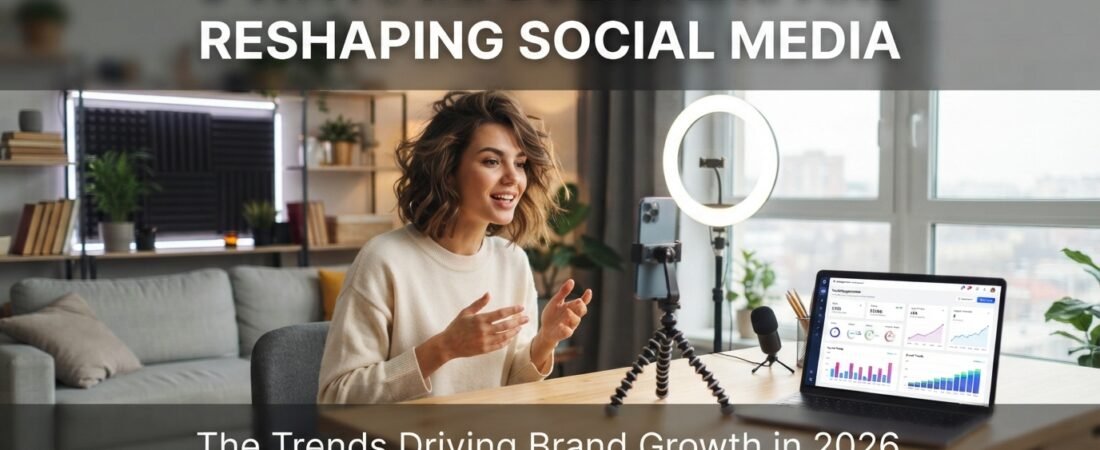
Social media for influencers looks completely different than it did even two years ago. Social Media for Influencers Growth used to mean posting constantly and hoping the algorithm noticed. Now it means treating content like a business asset — choosing platforms deliberately, building a real tech stack, and turning attention into sustainable income instead of just views. Here are the eight rules shaping how the smartest creators approach social media for influencers in 2026.
- Pick one primary platform and master it before expanding
- Treat social media as top-of-funnel, not the whole business
- Post consistently, but stop chasing every trend
- Build a creator tech stack instead of doing everything manually
- Diversify revenue beyond brand deals
- Use data to double down on what’s actually working
- Protect engagement quality over raw follower count
- Partner with the right brands and agencies, not just any brand
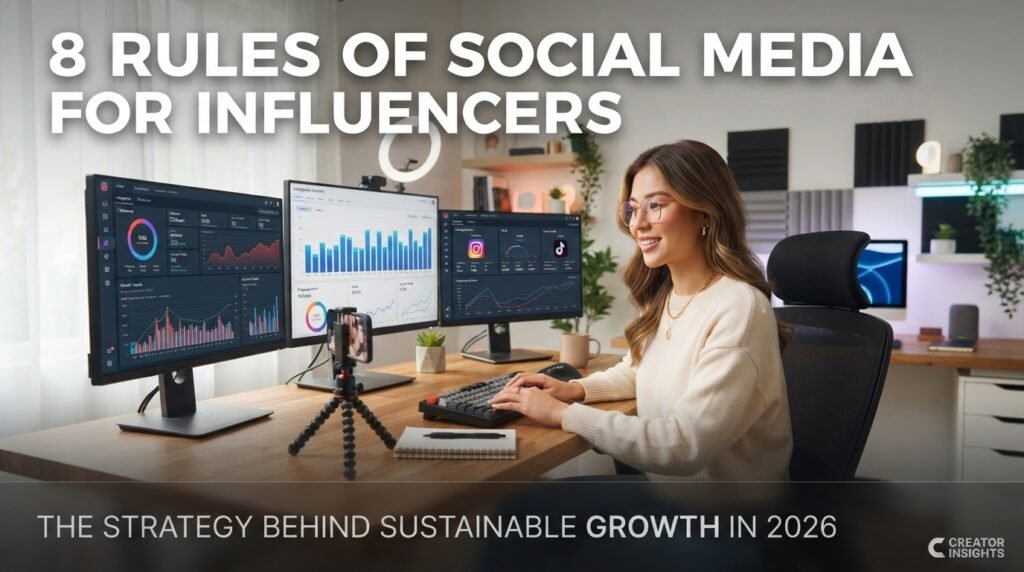
Contents
- 1 Why Social Media for Influencers Has Become a Real Career Path
- 2 1. Pick One Primary Platform and Master It Before Expanding
- 3 2. Treat Social Media as Top-of-Funnel, Not the Whole Business
- 4 3. Post Consistently, But Stop Chasing Every Trend
- 5 4. Build a Creator Tech Stack Instead of Doing Everything Manually
- 6 5. Diversify Revenue Beyond Brand Deals
- 7 6. Use Data to Double Down on What’s Actually Working
- 8 7. Protect Engagement Quality Over Raw Follower Count
- 9 8. Partner With the Right Brands and Agencies, Not Just Any Brand
- 10 How to Actually Get Started With Social Media for Influencers
- 11 Common Mistakes Influencers Make on Social Media
- 12 Final Thoughts
- 13 Frequently Asked Questions
Why Social Media for Influencers Has Become a Real Career Path
The scale of the creator economy makes it clear this isn’t a hobby anymore, and understanding social media for influencers dynamics has become essential for anyone hoping to build a lasting presence online. According to Influencer Marketing Factory’s 2026 platform guide, Social Media for Influencers the creator economy is projected to reach $234.65 billion globally in 2026, growing at a 22.5% compound annual growth rate, with over 207 million active creators worldwide. That same report notes that 84% of creators now use AI-powered tools somewhere in their daily workflow, and sponsored content still accounts for the majority of creator revenue.
That growth has changed what social media for influencers actually requires to succeed. Social Media for Influencers It’s no longer enough to be a good on-camera personality. Creators now need to think like small business owners — managing platforms, tools, brand relationships, and revenue streams as one coordinated system rather than a series of disconnected posts.
The competitive bar has also risen sharply. Social Media for Influencers With over 207 million creators competing for attention, standing out requires more than good content alone — it requires a deliberate strategy around platform selection, posting cadence, and monetization that most casual creators never build. Social Media for Influencers The creators pulling ahead in this environment treat social media for influencers work with the same rigor a small business owner brings to any other venture, rather than treating it as a side hobby that occasionally pays off.
1. Pick One Primary Platform and Master It Before Expanding
Spreading effort evenly across five platforms rarely works, especially early on. Social Media for Influencers According to a 2026 creator growth guide, the smarter approach is choosing one primary platform, mastering its format and algorithm, and repurposing that content elsewhere only once the core channel is working. Social Media for Influencers TikTok and YouTube Shorts currently lead for raw reach, while Instagram Reels tends to build stronger long-term authority with an audience.
This is one of the most consistent pieces of advice around social media for influencers growth, and one of the most commonly ignored. Social Media for Influencers Trying to be everywhere at once usually means being mediocre everywhere, rather than genuinely excellent on the one platform where your specific audience actually spends their time.
There’s also a practical resource argument here. Social Media for Influencers Every platform has its own algorithm quirks, ideal posting times, and content format expectations. Splitting limited time and energy across five platforms means learning five different systems at once, which slows down the feedback loop a creator needs to actually improve. Social Media for Influencers Mastering one platform first means faster iteration — post, review the data, adjust, repeat — instead of spreading that learning curve so thin that no single platform ever gets the attention it needs to click.
2. Treat Social Media as Top-of-Funnel, Not the Whole Business
The biggest mindset shift separating hobbyists from sustainable creators is understanding that social platforms are for attention, not ownership. Social Media for Influencers Per the same 2026 growth guide, social media’s real job is attracting attention and moving people into an owned channel — an email list, a community, or a paid offer — rather than being the business itself.
This matters because platforms change their algorithms constantly, and a creator who has built their entire livelihood on Instagram or TikTok reach alone is one algorithm update away from losing most of their income. Social Media for Influencers Smart social media for influencers strategy treats every platform as rented land and treats an owned audience — email, SMS, or a private community — as the actual asset worth protecting.
Owned audiences also convert better. Social Media for Influencers A follower who signs up for an email list or joins a paid community has already shown a level of commitment far beyond a passive scroll-and-like. Social Media for Influencers Creators who build this funnel consistently find that a smaller, owned audience often generates more revenue than a much larger following that only exists inside a platform’s algorithm-controlled feed, since that owned relationship survives algorithm changes and platform shutdowns alike.
3. Post Consistently, But Stop Chasing Every Trend
Consistency beats frequency for frequency’s sake. Social Media for Influencers Most creator growth guides converge on a similar cadence: three to five short-form videos per week performs better than posting daily without a clear strategy behind each piece. The content that tends to perform best isn’t the most polished — it’s personal stories, practical tips, and relatable mistakes that feel authentic rather than manufactured.
Chasing every trending sound or format burns creative energy fast and rarely builds a recognizable identity. Social Media for Influencers The creators who grow a durable audience through social media for influencers channels tend to have a clear, repeatable content pillar rather than constantly reinventing their approach to match whatever’s trending that week.
Trends can still play a role, but the strongest approach is adapting a trending format to fit an existing content pillar rather than abandoning that pillar entirely to chase a moment of viral attention. Social Media for Influencers A trend used to reinforce a creator’s core identity tends to attract the right kind of new followers — ones actually interested in what that creator normally posts — rather than a temporary spike of viewers who disappear once the trend fades.
4. Build a Creator Tech Stack Instead of Doing Everything Manually
Successful creators in 2026 rarely rely on a single tool. According to Influencer Marketing Factory’s breakdown, short-form video creators commonly stack editing tools, AI scripting assistants, clip repurposing software, and link-in-bio tools together, while e-commerce and lifestyle creators pair affiliate platforms with design and scheduling tools to run a leaner, more efficient operation.
This is a practical shift in how social media for influencers work actually gets done day to day. Social Media for Influencers The creators falling behind aren’t necessarily less talented — they’re often just spending hours on manual tasks that a properly built tech stack would automate, leaving less time and energy for the content itself.
Building this stack doesn’t need to happen all at once. Social Media for Influencers Most creators start with one or two tools that solve their biggest bottleneck — usually editing or scheduling — and add pieces as their workflow grows more complex. The goal isn’t collecting tools for their own sake; it’s removing enough manual friction that a creator can spend more of their limited time actually creating rather than managing logistics.
5. Diversify Revenue Beyond Brand Deals
Relying entirely on sponsored posts is risky, since brand budgets shift and individual deals can dry up without warning. Social Media for Influencers The creators building real financial stability increasingly layer multiple revenue streams — affiliate commissions, digital products, memberships, and courses — on top of sponsored content rather than depending on it exclusively.
This diversification is becoming a defining feature of how social media for influencers monetization works at a sustainable level. A creator with five smaller income streams is far more resilient than one whose entire income depends on the next brand deal closing.
Affiliate revenue in particular has grown into a meaningful income category on its own, especially for creators in lifestyle, beauty, and e-commerce niches, where product recommendations translate directly into trackable sales. Social Media for Influencers Pairing that with a digital product — a template, a guide, or a small course — gives creators a revenue stream that doesn’t depend on brand budgets or platform algorithms at all, which makes income far more predictable month to month.
6. Use Data to Double Down on What’s Actually Working
Guessing which content works is no longer necessary when every platform provides detailed analytics. Social Media for Influencers Creators who regularly review watch time, saves, shares, and follower growth by post — rather than just glancing at likes — consistently outperform those posting on instinct alone.
Data discipline is quietly one of the most underrated skills in social media for influencers growth. It’s not glamorous work, but reviewing what’s actually driving results, and cutting what isn’t, tends to compound into meaningfully faster growth over a few months compared to creators who never look past surface-level engagement numbers.
A simple monthly review often reveals patterns that aren’t obvious in the moment — a specific hook format that consistently outperforms others, a posting time that reliably gets more reach, or a topic that keeps bringing in new followers versus one that only pleases the existing audience. Social Media for Influencers Creators who build this review habit into their routine tend to make faster, more confident content decisions than those relying purely on gut feeling.
7. Protect Engagement Quality Over Raw Follower Count
A large but disengaged following is far less valuable than a smaller, genuinely engaged one — both for brand partnerships and for building a real community. Social Media for Influencers Buying followers, engagement pods, or chasing viral-but-irrelevant content can inflate numbers while actively hurting how the algorithm treats future posts, since low-quality engagement signals tend to suppress reach over time.
Brands evaluating creators for partnerships increasingly look past follower count toward engagement rate and audience quality first. Social Media for Influencers This shift means social media for influencers success is measured less by vanity metrics and more by how genuinely connected an audience actually is to the creator’s content.
This is also why smaller creators often out-earn bigger ones per follower. Social Media for Influencers A tightly engaged audience of 20,000 people who trust a creator’s recommendations is worth more to a brand than a passive audience of 200,000 who barely interact with the content. Social Media for Influencers Creators who understand this tend to prioritize deeper engagement — replying to comments, running polls, and building genuine community — over simply chasing the next follower milestone.
8. Partner With the Right Brands and Agencies, Not Just Any Brand
Not every brand partnership is worth taking, even when the payment looks appealing. Social Media for Influencers Partnerships that don’t fit a creator’s niche or audience tend to underperform for the brand and can quietly erode trust with the creator’s followers over time. The strongest long-term creator careers are built on selective partnerships with brands and agencies who understand the creator’s audience and give real creative freedom, rather than rigid, overly scripted briefs.
This is where working with an experienced partner on the brand side makes a measurable difference in how social media for influencers partnerships actually play out. The Digital Agency builds creator campaigns around genuine fit rather than reach alone, giving creators real creative latitude while still delivering the reporting brands need. Their influencer marketing services are built around long-term relationships rather than one-off transactional deals, and creators or brands interested in working together can get in touch here.
Selectivity works both ways. Creators who say no to poorly fitting brand deals, even when the payment is tempting, tend to preserve the trust that makes their audience valuable in the first place. Social Media for Influencers Agencies and brands that respect a creator’s audience — rather than treating every partnership as purely transactional — are the ones that end up building the kind of repeat relationships that benefit both sides over time.
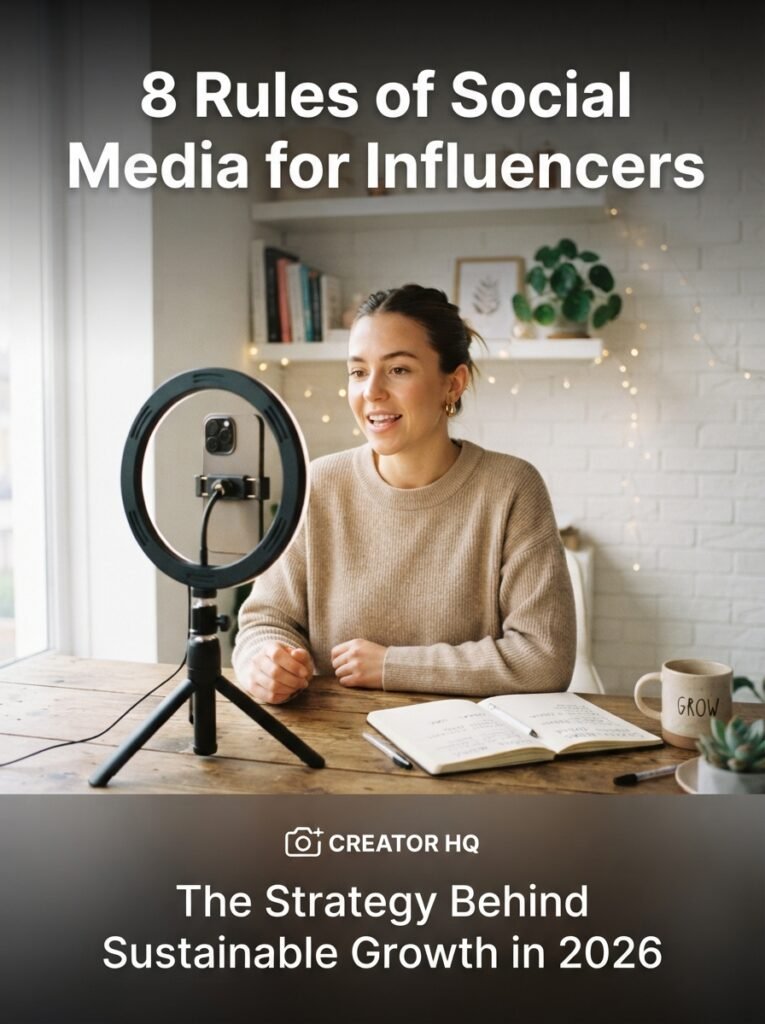
How to Actually Get Started With Social Media for Influencers
For creators just starting out, the sheer number of platforms, tools, and strategies around social media for influencers can feel overwhelming. A simpler starting sequence tends to work better than trying to implement all eight rules at once.
Start with audience, not platform. Before choosing where to post, get specific about who the content is actually for. A vague target audience leads to vague content that doesn’t resonate strongly with anyone. Creators who succeed early tend to know exactly who they’re talking to — their interests, frustrations, and what kind of content they already engage with.
Choose a platform based on that audience, not personal preference. It’s tempting to build on whichever platform a creator personally enjoys using, but the right choice depends on where the target audience actually spends time. A creator targeting professionals might find more traction on LinkedIn than TikTok, even if TikTok feels like the more exciting platform to build on.
Set a realistic, sustainable posting cadence from day one. New creators often start by posting daily, burn out within a few weeks, and quit entirely. A slower, sustainable cadence — even just two or three posts per week done consistently over months — tends to produce better long-term results than an intense short burst followed by silence.
Track progress monthly, not daily. Follower counts and engagement can fluctuate wildly day to day, which makes daily tracking mostly noise. Reviewing growth on a monthly basis gives a much clearer picture of whether a social media for influencers strategy is actually working, without the emotional rollercoaster of obsessing over each individual post’s performance.
Building this foundation properly in the first few months tends to matter more for long-term success than any single viral post ever could, and it’s the part of social media for influencers strategy that’s most often skipped in the rush to start posting.
Common Mistakes Influencers Make on Social Media
Even experienced creators fall into a few recurring traps when managing their social media for influencers presence.
Ignoring platform-specific formatting. Posting the exact same content, uncropped and unedited, across every platform signals low effort to both audiences and algorithms. Each platform rewards content built specifically for its own format and pacing, and creators who adapt their editing style per platform consistently see stronger performance than those who post one version everywhere.
Burning out from constant posting. Chasing daily posting without a sustainable content system is one of the leading causes of creator burnout. A batching workflow — filming multiple pieces of content in one session — tends to produce better results with far less day-to-day stress.
Neglecting the business side entirely. Contracts, usage rights, and payment terms matter just as much for creators as they do for the brands hiring them. Creators who skip reading the fine print on brand deals often find their content repurposed in ways they never agreed to.
Treating every platform update as a crisis. Algorithm changes happen constantly, and creators who panic and completely overhaul their strategy every time often do worse than those who stay consistent and let the data guide gradual adjustments instead.
Comparing growth speed to other creators. Every niche and audience grows at a different pace, and constantly benchmarking against creators in completely different categories tends to produce discouragement rather than useful insight. A far more productive habit is tracking a creator’s own month-over-month numbers and focusing on steady, compounding progress within their own social media for influencers strategy.
Final Thoughts
Social media for influencers has evolved from a casual creative outlet into a genuine, structured career path — one that rewards strategy, consistency, and smart tooling just as much as raw creativity. Social Media for Influencers The creators pulling ahead in 2026 aren’t necessarily the most talented on camera; they’re the ones treating their content like a real business, diversifying income, and partnering selectively with brands that actually fit their audience.
For brands and agencies working on the other side of these partnerships, understanding how social media for influencers strategy has changed is just as important. Social Media for Influencers Creators who’ve built real, data-informed audiences are looking for partners who respect that work, not just another paycheck.
None of these eight rules require a huge following or a big budget to start applying. Social Media for Influencers A creator with a thousand engaged followers who picks one platform, posts consistently, and treats their audience relationship seriously is better positioned for long-term growth than one with ten times the followers but no real strategy behind the numbers. The fundamentals of social media for influencers success in 2026 reward patience and discipline over chasing quick viral wins.
Frequently Asked Questions
How many platforms should an influencer be active on? Most creator growth guides recommend focusing on one primary platform first, then repurposing content to secondary platforms only once that core channel is generating consistent growth.
How often should influencers post on social media? Three to five short-form videos per week tends to outperform daily posting without a clear content strategy behind it.
What’s the biggest mistake new influencers make with social media for influencers strategy? Treating social platforms as the entire business rather than a top-of-funnel channel that should be feeding an owned audience, like an email list or private community.
Do influencers need an agency to grow, or can they do it alone? Many creators grow successfully on their own, especially in the early stages. Agencies tend to add the most value once a creator is fielding regular brand inquiries and needs help with negotiation, contracts, and matching with the right partnerships rather than sourcing opportunities from scratch.
What’s the fastest way to grow following on social media as an influencer? There’s no reliable shortcut, but consistent posting on one platform, built around a clear content pillar and genuine engagement with the audience, remains the most repeatable path to sustainable growth in social media for influencers work.