
Social media agency marketing is the single biggest lever most agency owners underuse — while they spend every working hour marketing clients, their own pipeline runs dry. It’s a strange irony of the industry: agencies are hired specifically because they know how to get other businesses attention, yet their own new-business pipeline is often the most neglected part of the operation.
This guide breaks down ten strategies that actually move the needle, so your agency stops relying on luck, referrals-by-accident, or a single big client renewal to survive the quarter, and starts building a predictable stream of qualified leads instead.
Whether you run a two-person shop working out of a spare bedroom or a growing team with a dedicated business-development hire, these tactics are built to scale with you. None of them require a massive budget to start — what they require is consistency, a clear system, and a willingness to treat your own growth with the same discipline you’d bring to a client’s account.
Here’s a quick look at the ten strategies covered in this guide:
- Build a Niche-Specific Content Engine — stop talking to everyone and start talking to the right people.
- Turn Case Studies Into Your Best Sales Asset — proof beats promises every time.
- Leverage Referral and Partner Programs — your happiest clients are your cheapest lead source.
- Invest in Search-Optimized Website Content — own the searches your future clients are already making.
- Use LinkedIn as a Founder-Led Growth Channel — people hire people, not logos.
- Run Retargeting Ads to Warm Up Cold Leads — most visitors don’t convert on the first visit.
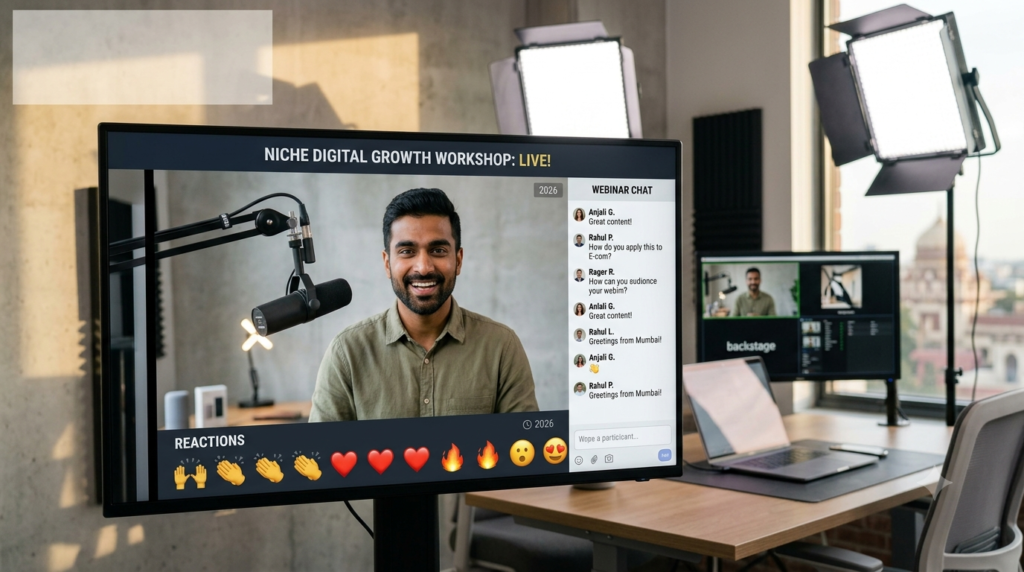
- Host Webinars and Live Workshops — a live room converts faster than a landing page.
- Get Listed on Verified Agency Directories — passive visibility that compounds over time.
- Build an Email Nurture Sequence for Leads — most deals close on the fifth touch, not the first.
- Track and Optimize With Data-Driven Reporting — what gets measured gets improved.
Each of these is explored in detail below, along with the reasoning behind it, the execution steps, and the common pitfalls that quietly sabotage agencies trying to do this alone.
Contents
- 1 1. Build a Niche-Specific Content Engine
- 2 2. Turn Case Studies Into Your Best Sales Asset
- 3 3. Leverage Referral and Partner Programs
- 4 4. Invest in Search-Optimized Website Content
- 5 5. Use LinkedIn as a Founder-Led Growth Channel
- 6 6. Run Retargeting Ads to Warm Up Cold Leads
- 7 7. Host Webinars and Live Workshops
- 8 8. Get Listed on Verified Agency Directories
- 9 9. Build an Email Nurture Sequence for Leads
- 10 10. Track and Optimize With Data-Driven Reporting
- 11 Frequently Asked Questions
- 12 Final Thoughts
1. Build a Niche-Specific Content Engine
Generic agencies struggle to stand out, and that’s exactly why social media agency marketing built around a defined niche performs so much better than a broad, everything-to-everyone approach. When you consistently publish content for one type of client — say, D2C fashion brands, SaaS founders, or regional real-estate developers — your audience starts to see you as the obvious specialist rather than another generalist competing purely on price.
A focused content engine also makes every other channel in this list work harder, because the same niche-specific insights can be repurposed across LinkedIn, email, webinars, and your website without starting from scratch each time.
Start by mapping the five questions your ideal client asks most often, whether in sales calls, onboarding forms, or industry forums, then build a monthly content calendar around answering them in public.
Over time, this becomes the backbone of your social media agency marketing strategy, feeding case studies, carousels, and lead magnets from a single well of expertise rather than a scattered mix of trending topics. Teams at The Digital Agency use this exact approach to keep their content pipeline focused instead of chasing whatever platform trend is popular that week.
The mistake most agencies make here is trying to appeal to too many industries at once, which produces content so generic it fails to resonate deeply with anyone. Narrowing your focus feels counterintuitive — it seems like you’re closing doors — but in practice it opens far more, because prospects in your chosen niche can immediately tell you understand their specific world.

2. Turn Case Studies Into Your Best Sales Asset
Prospective clients don’t want to hear that you’re good — they want to see proof. This is where social media agency marketing shifts from opinion to evidence. A well-structured case study answers three things clearly: what the client’s situation looked like before you, what you actually did, and what changed as a result, backed by real numbers wherever possible rather than vague claims of “increased engagement.”
Publish these as standalone long-form posts, but also slice them into short-form clips, carousels, and quote graphics that circulate independently across social platforms and reach people who’d never read a full case study page.
According to Databox’s agency research, referrals from existing clients remain the most effective way smaller agencies generate new leads, and strong case studies are what make those referral conversations easy — the client is essentially handing your proof to someone else on your behalf. Keep a living library of case studies organized by industry and problem type so your sales team can pull the most relevant one in seconds during a live call.
This is social media agency marketing at its most efficient: one well-documented client win, repackaged a dozen different ways, working across every channel simultaneously instead of a single format doing all the heavy lifting alone.
3. Leverage Referral and Partner Programs
Word-of-mouth is still the highest-converting channel in agency new business, but most agencies leave it to chance instead of building a deliberate system around it. A structured referral program — with clear incentives, easy-to-share assets, and a simple, well-timed ask at the right moment in the client relationship — turns goodwill into a repeatable pipeline instead of an occasional pleasant surprise. This is one of the most overlooked pieces of social media agency marketing, largely because it doesn’t feel like “marketing” in the traditional sense of ads or content.
Beyond client referrals, build partnerships with complementary vendors: web developers, PR firms, photographers, and marketing-tech platforms who serve the same client profile but don’t compete with your services directly.
A simple revenue-share or reciprocal-referral arrangement can quietly become one of your most consistent and cost-free lead sources over a year or two. Formalize the ask — don’t wait for referrals to happen organically, because most satisfied clients simply don’t think to refer you unless they’re explicitly prompted at the right moment.
Agencies that build this kind of social media agency marketing infrastructure early tend to find that, within a year, referrals and partner introductions make up a meaningful share of total new business, reducing their dependence on paid acquisition entirely.
4. Invest in Search-Optimized Website Content
Even the most social-first agency still needs a website that ranks. When a prospect searches for the exact service you offer, showing up in the results is social media agency marketing at its most passive and compounding — the content works around the clock without a media budget attached to it.
Build dedicated service pages for each offering, supported by blog content that answers the specific questions your buyers are actively typing into Google at every stage of their research.
Link your service pages to relevant case studies so visitors move naturally from “what do you do” to “does this actually work” without having to hunt for proof themselves. Treat your own site the way you’d treat a client’s — with proper keyword research, clear calls to action on every page, and regular content updates — because an agency with a thin, outdated website quietly undermines its own credibility before a prospect ever books a call.
Search-driven social media agency marketing also has a compounding advantage over paid channels: a page that ranks well today keeps generating leads for years with minimal ongoing investment, unlike ad spend that stops producing the moment the budget runs out.
5. Use LinkedIn as a Founder-Led Growth Channel
B2B buyers increasingly research the people behind an agency before they research the agency itself, which makes founder-led content one of the highest-leverage forms of social media agency marketing available today. Posting consistently about client wins, industry opinions, and lessons learned builds a personal audience that trusts the founder directly — and by extension, trusts the agency they run.
The format that tends to perform best is specific and slightly contrarian: a real result, a real number, and a clear point of view on why it worked, rather than recycled advice anyone could have written.
Avoid generic “5 tips” posts that could have come from any account; the goal is content only your agency could have produced, grounded in work you’ve actually done for real clients. Comment actively on prospects’ posts too — visibility in someone else’s feed is often the first genuine touchpoint before they ever click through to your profile.
This form of social media agency marketing also has a compounding trust effect: the more consistently a founder shows up with useful, specific insight, the faster cold prospects warm into inbound conversations, often skipping the early qualifying stages of a sales call entirely.
6. Run Retargeting Ads to Warm Up Cold Leads
Most people who visit your website or engage with a piece of content won’t convert on the first interaction, which is exactly why retargeting deserves a permanent place in your social media agency marketing stack.
A modest, disciplined budget aimed at website visitors, video viewers, and email subscribers keeps your agency visible while a prospect moves through their own internal decision timeline, which is often far longer than agencies assume.
Sequence your ads instead of running one static creative on repeat: start with a case study, follow with a client testimonial, and close with a direct offer or booking link. This mirrors how a good sales conversation would naturally progress, just automated across a paid channel instead of a live call. Keep creative fresh every few weeks — retargeting fatigue sets in fast with a small, repeatedly-served audience, and stale ads quietly stop converting long before the budget notices.
Done well, this layer of social media agency marketing rarely generates leads on its own; instead, it quietly nudges people who already discovered you through content or referral toward finally reaching out.

7. Host Webinars and Live Workshops
A live session converts attention into pipeline faster than almost any other format, because it compresses trust-building into a single focused sitting rather than weeks of scattered touchpoints. According to Sembly AI’s research on agency client acquisition, webinars and workshops give agencies a direct way to educate, connect with, and convert potential clients in real time, often compressing a multi-week sales cycle into a single hour. This makes them a natural extension of any serious social media agency marketing plan, especially for agencies selling higher-ticket, longer-consideration services.
Promote the session across email and social in the two weeks leading up to it, then repurpose the recording as a gated lead magnet afterward so it keeps generating leads long after the live date has passed.
Keep the content genuinely useful rather than a thinly veiled pitch — attendees who leave with real, usable takeaways are far more likely to book a follow-up call than those who feel sold to for forty-five straight minutes.
As part of a broader social media agency marketing calendar, a well-run quarterly webinar can outperform months of scattered one-off content, simply because it asks for a real time commitment and delivers a proportionally real result.
8. Get Listed on Verified Agency Directories
Directories like Clutch, GoodFirms, and Agency Vista function as passive top-of-funnel channels that keep working long after the listing itself is set up. This slower, compounding form of social media agency marketing rewards agencies that actively collect client reviews, since ranking within these directories is driven heavily by verified testimonials and completed, detailed profiles rather than paid placement alone.
Treat directory profiles the same way you’d treat a landing page: complete every section, upload real project examples with visuals, and request reviews from clients right after a successful project wraps up, while the win is still fresh in their mind. A handful of strong, detailed reviews on the right directory can outperform a much larger paid campaign, simply because buyers already trust third-party validation more than an agency’s own claims about itself.
This channel rewards patience more than any other item on this list — it’s social media agency marketing that compounds slowly, but a directory profile built two years ago can still be quietly sending qualified leads today with zero ongoing effort.
9. Build an Email Nurture Sequence for Leads
Not every lead is ready to buy the moment they find you, and this is where most agencies quietly lose deals — they capture an email address, send one follow-up, and give up when there’s no immediate reply. A structured nurture sequence keeps your social media agency marketing working in the background, delivering value over weeks or months until the prospect’s timing, budget, and priorities finally line up.
Map out six to eight emails that mix case studies, quick wins, and direct calls to book a call, spaced roughly a week apart so the sequence feels helpful rather than relentless.
Segment your list where possible so a SaaS lead and an e-commerce lead don’t receive identical content — relevance is what keeps open rates healthy over a long sequence rather than trailing off after the second or third email. Review performance monthly and retire or rewrite the emails that consistently underperform instead of leaving a stale sequence running indefinitely.
Agencies that treat this as core social media agency marketing infrastructure, rather than an afterthought bolted onto their newsletter, tend to close a noticeably higher share of the leads they already worked hard to generate elsewhere.
10. Track and Optimize With Data-Driven Reporting
None of the strategies above matter much if you can’t tell which ones are actually generating clients. Effective social media agency marketing depends on clean attribution — knowing whether a signed client came from a referral, a LinkedIn post, a retargeting ad, or a directory listing — so your budget and time keep moving toward what’s demonstrably working instead of what merely feels productive.
Set up a simple dashboard that tracks leads by source, cost per lead where applicable, and close rate by channel, reviewed monthly with the whole team rather than left to sit unopened in a shared folder.
According to a recent marketing agency statistics report, digital-first, measurable strategies now account for the majority of agency revenue, which underlines why guesswork-driven marketing is an increasingly expensive habit for agencies to keep in a market this competitive.
Treat your own growth engine with the same rigor you’d apply to a paying client’s account — because in a very real sense, that’s exactly what social media agency marketing is: your agency, as its own most important client.
Frequently Asked Questions
How much should an agency budget for its own marketing? There’s no universal number, but a useful starting benchmark is treating your own pipeline like a client account and allocating a fixed percentage of monthly revenue — commonly somewhere between 5% and 10% — toward social media agency marketing activities such as content production, paid retargeting, and directory listings.
The exact figure matters less than the discipline of protecting that budget even in busy months, since this is precisely when agencies are most tempted to skip their own marketing in favor of client deliverables.
How long does it take to see results from these strategies? Channels vary widely. Referral programs and founder-led LinkedIn content can produce inbound conversations within weeks, while search-optimized website content and directory listings are slower, compounding forms of social media agency marketing that often take three to six months to show meaningful traction.
A realistic plan blends at least one fast-moving channel with one or two slower, compounding ones so the pipeline doesn’t feel empty while the long-term channels mature.
Should a small agency try all ten strategies at once? No. Attempting every channel simultaneously with limited hands is the fastest way to execute all of them poorly. A more sustainable approach to social media agency marketing is choosing two or three strategies that match your team’s existing strengths — a founder who enjoys writing might start with LinkedIn and email, while a team with strong client relationships might lean into referrals and case studies first — then expanding once those channels are running smoothly.
Who should own agency marketing internally? In small agencies, this usually falls to the founder or a senior team member, since it requires enough context on client work to produce credible case studies and content.
As the agency grows, many teams eventually dedicate a part-time or full-time role to social media agency marketing specifically, treating new-business generation as its own discipline rather than something squeezed in between client deadlines.
Final Thoughts
Consistency beats intensity when it comes to social media agency marketing. Agencies that win new business predictably aren’t necessarily doing more than everyone else — they’re doing a handful of these ten strategies on a fixed weekly rhythm instead of in occasional bursts whenever the pipeline runs dangerously dry.
Pick two or three to start with, build simple systems around them, and layer in the rest once the first ones are running on something close to autopilot. The agencies that grow fastest in 2026 won’t be the ones with the biggest budgets — they’ll be the ones that finally start marketing themselves with the same discipline they’ve always brought to their clients.
Revisit this list every quarter, retire whatever isn’t earning its place, and keep doubling down on the two or three channels that are quietly doing most of the work — that’s usually all it takes to turn an unpredictable pipeline into a genuinely reliable one.