
Digital marketing website design has changed dramatically over the last few years. Businesses no longer treat their website as a digital brochure — they treat it as a growth engine. Whether you’re a startup founder or a marketing manager at an established company, understanding what makes a digital marketing website effective can be the difference between a site that just sits online and one that actively brings in leads, sales, and long-term brand trust.
In this guide, we’ll break down the 7 essential elements every high-performing digital marketing website needs. Here’s a quick look at what we’ll cover:
- Clear Value Proposition & Messaging
- Search Engine Optimized Content Structure
- Fast Loading Speed & Mobile Responsiveness
- Strong Call-to-Actions (CTAs)
- Trust Signals & Social Proof
- Lead Capture & Conversion Funnels
- Analytics & Continuous Optimization
We’ll go through each of these in detail, with practical tips you can apply right away.
Contents
- 1 Why a Digital Marketing Website Matters More Than Ever
- 2 1. Clear Value Proposition & Messaging
- 3 2. Search Engine Optimized Content Structure
- 4 3. Fast Loading Speed & Mobile Responsiveness
- 5 4. Strong Call-to-Actions (CTAs)
- 6 5. Trust Signals & Social Proof
- 7 6. Lead Capture & Conversion Funnels
- 8 7. Analytics & Continuous Optimization
- 9 Bringing It All Together
- 10 Final Thoughts
Why a Digital Marketing Website Matters More Than Ever
According to HubSpot’s State of Marketing Report, businesses that invest in a well-optimized website see significantly higher conversion rates than those relying purely on paid ads or social media alone. A digital marketing website isn’t just a place to list your services — it’s often the first real interaction a potential customer has with your brand.
Think about it this way:
- A visitor searches for a service on Google
- They land on your website
- Within seconds, they decide whether to stay or leave
That decision is shaped entirely by how well your website is built, structured, and optimized. This is exactly why every digital marketing website needs to be treated as a strategic asset, not just a design project.
1. Clear Value Proposition & Messaging
The first thing any visitor should understand within 5 seconds of landing on your site is: what do you do, and why should I care?
A strong digital marketing website leads with clarity, not cleverness. Avoid vague taglines like “We deliver results” without context. Instead:
- State exactly what service or product you offer
- Explain who it’s for
- Highlight the outcome or benefit the visitor will get
For example, at The Digital Agency, the homepage messaging focuses on measurable growth outcomes rather than generic buzzwords — a good example of a digital marketing website doing messaging right.
Practical Tips for Better Messaging
- Use short, benefit-driven headlines (not more than 10 words)
- Add a one-line subheading that expands on the value
- Keep the tone conversational, not corporate jargon-heavy
2. Search Engine Optimized Content Structure
If your digital marketing website isn’t structured for search engines, it’s invisible to the people actively searching for your services. SEO isn’t just about keywords anymore — it’s about structure, intent, and user experience combined.
Key structural elements include:
- Proper heading hierarchy (H1, H2, H3 tags used logically)
- Keyword-optimized page titles and meta descriptions
- Internal linking between related pages
- Clean URL structures (avoid long, messy slugs)
According to Search Engine Journal, pages with clear content hierarchies and proper on-page SEO consistently outrank poorly structured competitors, even when the underlying content quality is similar.
A well-optimized digital marketing website also uses schema markup, alt text on images, and descriptive anchor text for internal links — small details that compound into major ranking advantages over time.
Content Structure Checklist
- One H1 per page containing your primary keyword
- H2s for major sections, H3s for sub-points
- Short paragraphs (2-4 lines) for readability
- Bullet points for scannable information
3. Fast Loading Speed & Mobile Responsiveness
Speed is no longer optional. A slow digital marketing website loses visitors before they even see your content. Studies consistently show that even a one-second delay in load time can significantly hurt conversion rates.
Here’s what impacts speed and mobile experience most:
- Image compression and lazy loading
- Minimal use of heavy scripts and plugins
- Mobile-first responsive design
- Reliable hosting infrastructure
Since the majority of web traffic today comes from mobile devices, your digital marketing website must look and function flawlessly on smaller screens — not as an afterthought, but as the primary design consideration.
Want help auditing your site’s speed and mobile performance? Check out The Digital Agency’s services page for a full technical SEO and site performance review.

4. Strong Call-to-Actions (CTAs)
Every page on your digital marketing website should guide the visitor toward a specific next step. Without clear CTAs, even the best content and design go to waste because visitors simply don’t know what to do next.
A good CTA isn’t just a button that says “Submit” or “Click Here.” It should:
- Use action-oriented language (“Get Your Free Audit,” “Book a Strategy Call”)
- Stand out visually from the rest of the page
- Be placed at natural decision points (end of sections, sidebars, sticky headers)
- Create a sense of value or urgency without sounding pushy
On a well-built digital marketing website, CTAs aren’t scattered randomly — they follow the visitor’s journey. Someone reading a blog post might see a soft CTA like “Learn more about our SEO services,” while someone on a pricing page sees a stronger CTA like “Get Started Today.”
Where CTAs Matter Most
- Homepage hero section — the very first thing visitors see
- End of blog posts — capitalize on engaged readers
- Service pages — right after explaining the benefit
- Exit-intent popups — a last chance to capture interest
For instance, The Digital Agency structures its CTAs around clear next steps like consultation bookings, which keeps the visitor journey simple and frictionless — a smart approach any digital marketing website owner can learn from.
5. Trust Signals & Social Proof
People don’t buy from websites they don’t trust. Before a visitor fills out a form or picks up the phone, they’re subconsciously scanning your site for reasons to believe you’re credible. This is where trust signals come in.
A high-converting digital marketing website typically includes:
- Client testimonials with real names and, ideally, photos or company logos
- Case studies showing measurable results (traffic growth, lead increase, ROI)
- Certifications and partnerships (Google Partner badges, industry awards)
- Reviews from platforms like Google, Clutch, or Trustpilot embedded directly on the site
According to BrightLocal’s Consumer Review Survey, a large majority of consumers say they trust online reviews as much as personal recommendations from friends or family — which makes review integration a non-negotiable part of any digital marketing website built for conversions.
Simple Ways to Build Trust Fast
- Add a “Trusted by” section with client logos near the top of the homepage
- Link case studies directly from relevant service pages
- Display years of experience or number of clients served
- Keep testimonials specific — vague praise carries less weight than measurable outcomes
Trust isn’t built through one single element — it’s the cumulative effect of small, consistent signals spread throughout your digital marketing website.
6. Lead Capture & Conversion Funnels
Traffic alone doesn’t grow a business. What actually matters is how effectively your digital marketing website converts visitors into leads — and eventually, into paying customers.
A conversion-focused site typically includes multiple layered opportunities to capture interest, rather than relying on a single generic “Contact Us” form:
- Lead magnets — free guides, checklists, or templates in exchange for an email
- Newsletter sign-ups — for visitors not ready to buy yet
- Live chat or chatbots — for instant answers to quick questions
- Multi-step forms — reduce friction by breaking long forms into smaller steps
The goal of a well-designed digital marketing website funnel is to meet visitors wherever they are in their decision-making process. Someone in the early research stage might download a free resource, while someone ready to buy goes straight to a consultation form.
Building a Simple but Effective Funnel
- Awareness stage — blog content, SEO pages, social media traffic
- Consideration stage — case studies, service pages, lead magnets
- Decision stage — pricing pages, testimonials, direct CTAs
- Follow-up stage — email nurture sequences for those not yet converted
Agencies like The Digital Agency often build these funnels directly into their client websites, ensuring every visitor — regardless of where they enter the site — has a clear path forward instead of hitting a dead end.
Common Funnel Mistakes to Avoid
- Sending all traffic to one generic contact page
- Asking for too much information too early (name, email, phone, budget all at once)
- No follow-up sequence for leads who don’t convert immediately
- Ignoring mobile users in the funnel design
A digital marketing website without a thought-out funnel is essentially leaving money on the table — traffic comes in, but very little of it turns into actual business.
7. Analytics & Continuous Optimization
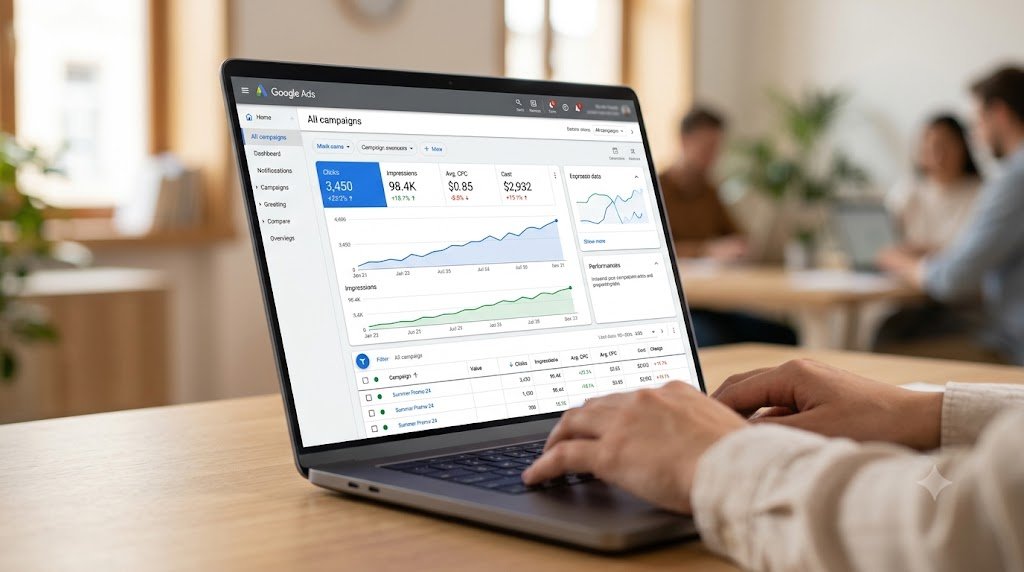
A digital marketing website is never really “finished.” Even after launch, the best-performing sites are the ones that get reviewed, tested, and improved on an ongoing basis based on real visitor data.
Without analytics, you’re essentially guessing what’s working and what isn’t. With the right tracking in place, you can make decisions based on evidence instead of assumptions.
Core analytics elements every site should have:
- Google Analytics 4 (GA4) — track traffic sources, user behavior, and conversions
- Heatmaps and session recordings — tools like Hotjar show exactly where visitors click, scroll, and drop off
- Conversion tracking — know which pages, campaigns, or CTAs actually generate leads
- A/B testing — compare different headlines, CTAs, or layouts to see what performs better
According to Think with Google, companies that regularly test and optimize their digital properties based on user data consistently outperform those that treat their website as a static, one-time project.
What to Review Regularly on a Digital Marketing Website
- Bounce rate by page — are visitors leaving too quickly?
- Top exit pages — where is the funnel breaking down?
- Keyword rankings — are your target terms improving or slipping?
- Page load speed — has it degraded due to new plugins or images?
- Conversion rate by traffic source — which channels bring the most valuable visitors?
A digital marketing website that’s actively monitored and optimized month over month will almost always outperform one that’s left untouched after launch. Small, consistent improvements — a better headline here, a faster-loading image there — compound significantly over a year.
Building a Simple Optimization Routine
- Weekly: Check traffic and conversion trends for anomalies
- Monthly: Review top-performing and worst-performing pages
- Quarterly: Run A/B tests on key pages (homepage, landing pages)
- Annually: Full content and SEO audit to refresh outdated pages
Agencies such as The Digital Agency typically build this kind of ongoing optimization into their client retainers — because a digital marketing website that isn’t monitored tends to lose ranking and conversion performance over time, even if it was built well initially.
Bringing It All Together
Building an effective digital marketing website isn’t about having the flashiest design or the most pages — it’s about combining the right elements strategically:
- Clear, benefit-driven messaging that instantly communicates value
- SEO-optimized structure that helps you get found in search
- Fast, mobile-friendly performance that keeps visitors engaged
- Strong CTAs that guide visitors toward action
- Trust signals that build credibility before the first conversation
- Conversion funnels that capture leads at every stage
- Ongoing analytics and optimization that keep improving results
Most businesses focus heavily on design and completely skip the strategic elements — SEO structure, funnels, and analytics — which is exactly why so many sites get traffic but very few actual leads or sales.
Final Thoughts
If your current digital marketing website is missing several of these elements, it doesn’t mean starting from scratch. Often, targeted improvements — fixing page speed, adding testimonials, tightening up CTAs — can noticeably shift performance within weeks.
The key is treating your website not as a one-time project, but as a living part of your marketing strategy that deserves regular attention and refinement.
If you’d like a professional review of where your site currently stands, The Digital Agency offers website audits covering SEO, speed, conversion structure, and overall performance — a good starting point before deciding what to prioritize.